2007-11-16

Gold, Copper & the Kinkaseki Mine (金瓜石)

Seductive Treasure, Shameful Secrets
台灣金銅山 - 金瓜石


The (formerly) rich veins of gold and copper underlying Jiufen (九份) and Jinguashi (金瓜石, also spelled "Jinguashih") are part of the legacy of volcanic and subvolcanic activity that recast northern Taiwan's landscape between 1 and 2 million years ago. While lava spouted and volcanoes piled up across much of what is now Yangmingshan (陽明山, directly north of Taipei City), magma stopped just short of the surface here, leaving the region underlined with igneous rock and quartz-encrusted "breccia pipes".


Placer (alluvial) gold was discovered near the end of the 1880s in Keelung River (基隆河) sediment near Nuan Nuan (暖暖), at the eastern terminus of sampan routes traversing the Taipei Basin. One account attributes the discovery to a Cantonese member of a railway construction crew who had previously panned for gold in California and saw something enticingly familiar glinting in mud scooped from the river. The find sparked a gold rush that for several heady years saw the Keelung River bank done over in a motley hodgepodge of prospector tents and shanties.


While many came to work the riverbed, others prospected in the wilderness upstream, hoping to reach the font of Keelung's golden sands. Strikes were first made around the source of the Keelung River in the rugged hills around Jiufen, a settlement overlooking the sea once so remote and sparsely populated that its name (九份 - literally "Nine Portions") was conferred by merchants sailing the coast to designate the number of provision bundles they could expect to sell there. In 1893, less than two years before Japan took control of the island, a large strike was made beyond Jiufen, in the hills below Teapot Peak (茶壺山). Prospectors flooded in and, taking note of the unusual shape of a rocky outcropping, named the district Jin-gua-shih (金瓜石, "Pumpkin Rock").


By the 1890s, rights to mine beneath Jiufen had been licensed to several families, who divvied up and further subleased their holdings to the flood of hopeful prospectors. As a result, dozens (perhaps hundreds?) of small shafts were dug and worked in and around the town. Jiufen, like all mining towns, enjoyed its raucous boom days and, once the gold gave out, slid into melancholy bust.

The town was ready to crumble into obscurity when film director Hou Hsiao-hsien (侯孝賢) chose Jiufen's steep alleyways and fading façades as the backdrop for his 1989 film City of Sadness (悲情城市, see movie trailer here). Its place in Taiwan's history thus confirmed, Jiufen joined the pantheon of Taiwan's modern historical landmarks and is today a congested weekend tourist trap chock full of eateries, teahouses and souvenir shops.


The newer and richer mines at Jinguashi followed a somewhat different fate. After 1895, Japan consolidated and then nationalized mining operations at Kinkaseki (the Japanese pronunciation of Jinguashi). Mountains of earth were, literally, "moved" and the land was torn apart to reach and follow subterranean mineral veins. Copper was discovered in 1933 and, by the 1940s, Kinkaseki was producing more copper than any other mine in the Japanese Empire.

Nearly 600 British and Commonwealth soldiers taken prisoner during the 1942 fall of Malaysia and Singapore were shipped to Kinkaseki and interned at the most infamous of Japan's 15 POW camps on Taiwan. The more than 1,100 prisoners held at the Kinkaseki camp between 1942 and 1945 worked as slave labor in the mines and endured the harshest of conditions. Cave-ins, injury, disease, malnutrition and executions made Kinkaseki one of the worst of Japan's POW camps. Fewer than 100 of the Allied prisoners held at Kinkaseki are believed to have survived to war's end.

With the end of the Second World War, Jinguashi mines reopened under ROC government management. However, increasing tunnel depths and engineering difficulties gradually made the mine uneconomical ... and operations shut down for good in 1971.


- JM

2007-11-09

Slice o' South China Sea Heaven II (東沙群島)


Dongsha lies at the northern end of the South China Sea, some 160km southeast of Hong Kong and 240km southwest of Taiwan. The halo-shaped atoll is a living coral metropolis that preserves the outline of a long-submerged ancient volcano. With the exception of sandy Dongsha Island/Islet (a 2+ square kilometer patch of dry land), the entire atoll lies just below South China Sea waves. Surrounded by open ocean for at least a hundred miles in all directions, Dongsha's coral spires have given nightmares to navigators for centuries. Early European maps of the South China Sea marked the Pratas with a simple circle of crosses to call attention to what happens to big ships that wander too close. Today, the abandoned hulks of several ships still cling to the shallow crest of the atoll.

Because atoll shallows are navigable to low-draft fishing boats, fishermen from China, attracted by the area's rich marine life, arrived to build temporary and then semi-permanent lean-tos on Dongsha Island. However, with no fresh water (except for rain) and little to eat, Dongsha has never presented conditions suited to long-term human settlement.

Although nominally part of China, a Japanese entrepreneur landed on the deserted atoll around 1907 to mine guano - stratified bird droppings rich in phosphate and nitrogen (think fertilizer and gunpowder). China didn't make much of a fuss about the intrusion
(the Qing Dynasty was busy collapsing at the time), but negotiated a Japanese withdrawal in 1909. Dongsha Island returned to hosting itinerant fishermen until World War Two, when Japan stationed troops and built an airfield for Zero fighters.

After 1949, Dongsha was put under the control of the ROC Marines (陸戰隊), which promptly installed heavy artillery, barbed wire, concrete bunkers and everything else necessary to rebuff the PLA offensive bound to come. In the years of calm that ensued, however, thousands of Marines, bored stiff in a primitive paradise, improvised new and creative ways to expend the generous rounds of artillery and rifle shells supplied by headquarters. Dongsha's coral reef and marine ecology suffered greatly under more than four decades of military care.


Today, Dongsha is administered by Taiwan's Coast Guard (海巡署), which oversaw an overdue about-face change in policy toward the atoll. Those now stationed on the island by and large observe a ban on all resource harvesting (fishing, crabbing, souvenir hunting, etc.) and sup only on food and drink shipped in from Kaohsiung. I learned that even swimming is against the rules for those stationed there (at least strongly frowned upon). A main objective of the Coast Guard on this southern outpost of the ROC, beyond upholding Taiwan sovereignty in the area, is protecting the coral reefs from further destruction. This is pursued primarily by shooing away the fishing boats (mostly from China and Vietnam) that move in unfailingly after nightfall in hopes of working Dongsha reefs. The Coast Guard has a difficult, often thankless task that is made exponentially more difficult by Taiwan's extemporized international standing.


Rather than impounding trespassing vessels (which might upset the cordial status quo that accepts Taiwan as custodian of Chinese sovereignty on the Pratas), Taiwan's Coast Guard seems bound to a good neighbor policy in all dealings with fishermen and their boats - even when "caught in the act". While on Dongsha Island, we watched the Coast Guard return to sea a small boat of shellfish divers from Hainan Island (海南島, China) whose engine had conked off the reef. The Coast Guard repaired the engine and escorted the divers and their boat into open waters beyond the reef, where they surely rendezvous'd with a mother ship anchored just outside Taiwan's territorial waters.


Dongsha Island and its reef appear, finally, to have a chance to recover. White coral sand beaches are now clear (pretty much) of razor wire and the more obvious defensive fortifications have been cleared away or allowed to crumble. Illicit reef destruction by fishermen and rising / warming waters now pose the greatest threats. One of the Hainan shellfish divers related that nearby waters are much warmer than in years past and large swathes of coral have turned black. Shellfish catches apparently aren't what they used to be either.


I remain in awe of Dongsha's tropical beauty and isolated tranquility. We had free reign of the island while there, and I took full advantage of the week in paradise - walking the beaches, sitting patiently by sand crab hovels awaiting an appearance, taking pictures and enjoying sunsets. The Pratas seems in good hands with the Taiwan Coast Guard, which seems as eager as anybody to make sure the atoll has time and space to recover.


I hope that the National Park, when declared, continues to focus on conservation, with just enough tourism allowed to win for the reef broader appreciation and respect as a natural heritage site worthy of greater regional and international protection. The international community should also take advantage of Taiwan's willingness to protect and preserve Dongsha's isolation to the benefit of the entire Southeast Asia ecosystem.

Special thanks to those on the Pratas who helped turn a week-long stay into memories sure to last a lifetime.


-JM

2007-11-08

Slice o' South China Sea Heaven I (東沙群島)


This past spring, I had the good fortune to accompany one of Taiwan's best documentary film directors (now producer of CTV (中國電視公司)'s long-running, one-of-a-kind TV documentary, Discovering China [大陸尋奇]) and production crew to Dongsha Atoll (東沙群島, aka Pratas Atoll), one of Taiwan's two holdings in the South China Sea (南中國海).


Although Dongsha remains off limits to the casual visitor, being part of the documentary team gave me a reason to be there and a seat on the 1 1/2 hour, once-a-week flight from Kaohsiung City.


Director Su (蘇志宗) was shooting material for a documentary on the Pratas scheduled for release in conjunction with a declaration of Dongsha Atoll and surrounding waters as Taiwan's 7th National Park. The DVD was released this summer. The National Park, I believe, is still in the works.

Dongsha Islet, the only part of the Atoll to break surface waters, is one of a number of islands along and around the China coast that has been garrisoned by the ROC military since the Nationalist (KMT) government, under Chiang Kai-shek, executed its "strategic withdrawal" from the Chinese mainland in 1948/49. China's new communist leaders lacked a navy to challenge ROC sovereignty offshore, and by the time they had acquired one faced other priorities (the Cold War, détente, maintaining the "status quo" in Cross-Strait relations) that set ambitions to "liberate" these scattered island outposts on the back burner.


Sovereignty over Dongsha Atoll is today "disputed" only in the sense that the reef is claimed by both China and Taiwan. As China claims sovereignty over all of Taiwan anyway, Beijing appears content to acknowledge Taiwan's authority over Dongsha pending eventual "resolution" of Taiwan's own political status.

The situation on Taiping Island (太平島, aka Itu Aba), Taiwan's other significant South China Sea property - further to the south, is much more complicated. Located at the center of the "sea of oil" imagined to underlie the area, Taiping Island and its reefs are contested by Vietnam and the Philippines ... as well as by China.


(part two to follow soon)

- JM

2007-11-02

Technorati Profile

2007-11-01

Hill Indigo (大菁)


Indigo, one of civilization's oldest dyes, has tinted the robes of Egyptian pharaohs and brightened the clothing of both Chinese peasant and American farmhand (think Levis jeans). Before cotton was "King", indigo was one of the U.S. Deep South's most important cash crops.


(click to open larger image)


Rather than describing a particular species, indigo refers to a widely dispersed group of plants that contains the compound indican. Hill indigo (Strobilanthes cusia) one of two major commercial indigo plants cultivated in Taiwan was reportedly introduced in the late 1700s from the Chinese mainland, where it is native. For more than a century afterward, indigo blue defined the color of the Taiwanese wardrobe.

Synthetic indigo, formulated in the 1890s by German chemists, signaled the beginning of the end for Taiwan's indigo industry. By the 1920s, local textile mills had switched completely over to synthetic dye stocks.


Recognition: Naturalized hill indigo today grows in northern Taiwan along mountain streams well-shaded by forest canopy. Patches can be found throughout Keelung, eastern and northern Taipei County, and Yangmingshan National Park (and probably other parts of Taiwan too). As hill indigo is not indigenous to the island, significant tracts typically signal areas of previous commercial cultivation. Look for signs of terracing and pits where the dye would have been bleached from leaves.

The herbaceous plant grows to over one meter in height and produces delicate lavender-white flowers during winter (December/January). Its fleshy leaves are serrated and grow to about 11cm in length. Leaves emerge in opposing pairs from the main stem, with leaf pairs alternating at right angles to one another (in a repeating "cross" formation) up the stem.


-JM

2007-10-29

Historic Lighthouse Location Map

Here is a map, using Davidson's 1903 map of Taiwan as a base, showing the location of various historic lighthouses around Taiwan and dates built. Note that the current lighthouse at Bitoujiao (鼻頭角) is a relatively modern (1960s) reconstruction ... but the scenery in and around is still gorgeous and worth the 40 minute walk from the main road! (double-click to open larger image)


- JM


2007-10-27

Lighthouses in Taiwan (台灣的燈塔)

Lighthouses are set along magical promontories at lands' end, ... places to enjoy a bit of solitude, breathe deep and clear out some of the cobwebs.

Beware: Island Ahead - Taiwan's Lighthouses

When junks (highly maneuverable, shallow-draft ships) still carried most of East Asia's sea commerce, there was little need for permanent navigational beacons. Pirates and difficult handling in rough water tended to restrict travel to daylight hours and good weather. When needed, bonfires could be lit on hilltops to guide wayward vessels home after nightfall.

However, from the early 19th century onward, a fast growing intercontinental trade carried aboard purpose-built clippers redefined maritime shipping needs. A permanent network of lighthouses was necessary to ensure the safety of these new ships, which were often at sea for days or weeks at a time. To the modest beacons already marking the entrances of early trade outposts like Manila and Batavia (Jakarta), western business interests gradually added permanent lighthouses in Hawaii (1840), Singapore (1851), Sakhalin (1860), China (1865), and Japan (1866). By the turn of the 20th century, lighthouses watched over all major trading ports as well as many of the region's navigational hazards.

The "frontier" flavor of the pre-1895 Formosa trade meant that Taiwan's earliest lighthouses were installed to warn ships away from coastal danger rather than guide them to safe anchorage. Shipwrecks along Taiwan's southernmost peninsula, which saw survivors lose their lives to indigenous tribesmen or get roughed up by Chinese, inflamed international public opinion and spurred policymakers in Japan and the United States during the mid-19th century to toy with thoughts of occupying Taiwan's eastern seaboard (based on the argument that failure to bring eastern Taiwan to heel placed the region beyond Qing sovereignty and, in the logic of 19th century Great Powers, into a power vacuum). In the end, belated Qing attention to the island, a Civil War in the United States, and alarm amongst European imperialists (who viewed such an occupation as the beginning of a free-for-all grab for territory that could quickly engulf all of China) conspired to keep Taiwan Chinese, for the moment.

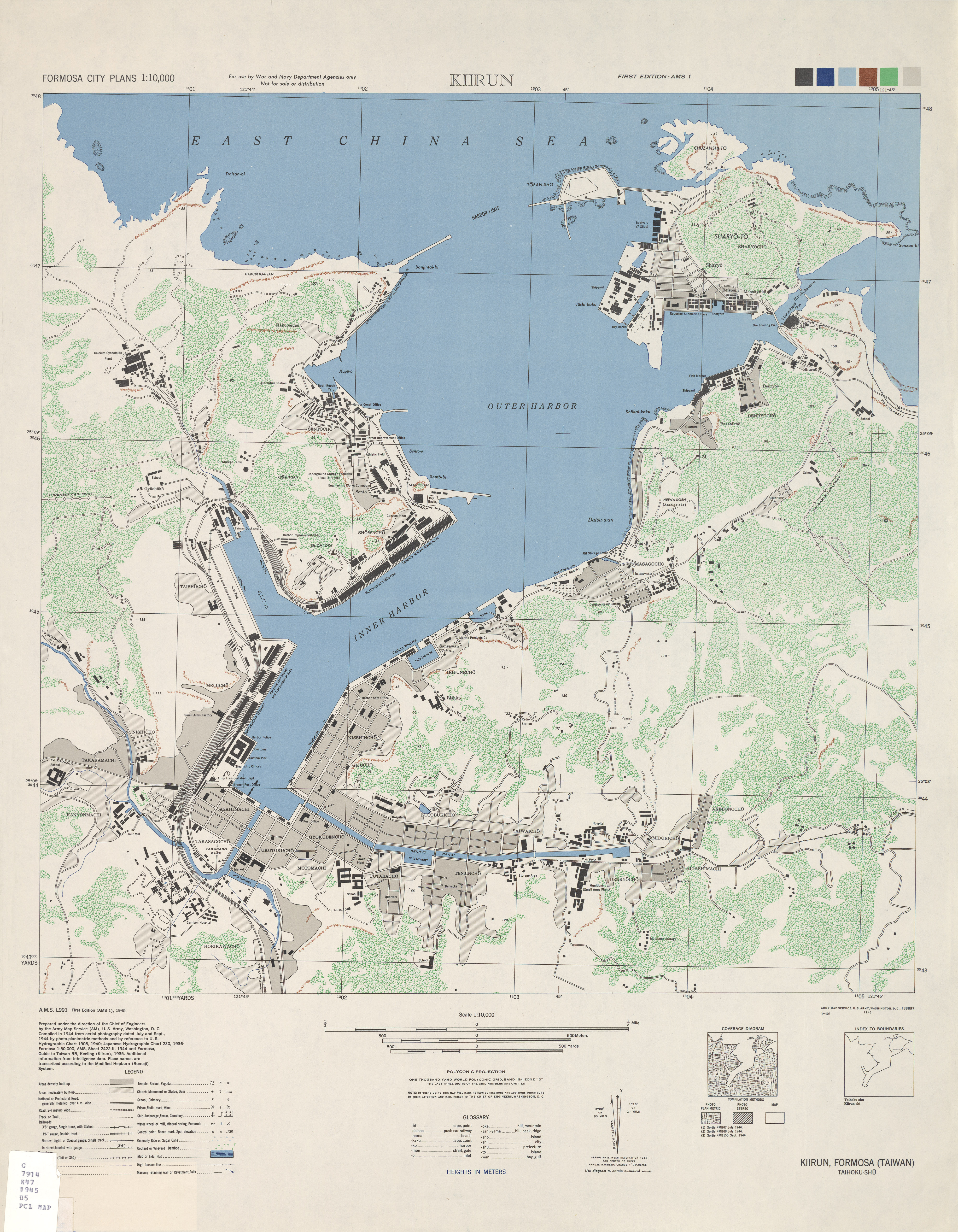
The Qing built and garrisoned the island's first lighthouse on the hazardous southern cape at Eluanbi (Erluanbi, 鵝鸞鼻) in 1882. The northeast coast got its first lighthouse in 1896 high above Bitoujiao's (鼻頭角) jagged shoreline, some 50km southeast of Keelung. The Japanese built Keelung's first lighthouse in 1899 along the harbor's northwestern entrance to support early modernization efforts.


In addition to those at Bitoujiao and Keelung, lighthouses of historical and scenic interest in northern Taiwan include Sandiaojiao (Punto San Diego - 三貂角, built in 1931) and Fuguijiao (Eerste Hoeck - 富貴角 built in 1896), as well as an ascetic beacon on the scenically interesting Yeliu Peninsula (Punto Diablo - 野柳), built in 1967. Agincourt is northern Taiwan's most visually impressive and least accessible lighthouse. Raised in 1906, the Victorian structure rises 26 meters above Pengjia (Pengchiayu, 彭佳嶼), a windswept volcanic islet of 114 hectares situated 56km northeast of Keelung.
-JM